
2026 Speaker & Panelist Profiles
Meet Our Speakers & Panelists
UCLA Health Data Day brings together visionary leaders, data experts, clinicians, and researchers who are shaping the future of healthcare through data-driven innovation. Explore the profiles of our distinguished speakers and panelists to learn more about their expertise, current work, and contributions to advancing analytics, technology, and patient care.
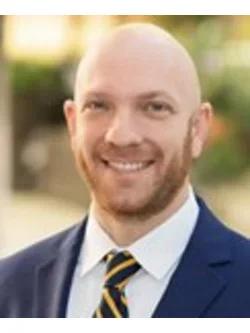
Dr. Travis Zack, MD, PhD
Chief Medical Officer, OpenEvidence. Assistant Adjunct Professor, UCSF
Dr. Travis Zack is the Chief Medical Officer of OpenEvidence and an Assistant adjunct professor at UCSF. His research lies at the intersection of computational biology, clinical medicine, and artificial intelligence. Travis received his PhD in Biophysics from Harvard and an MD in the Health Sciences and Technology track at MIT and Harvard Medical School. Dr. Zack has dedicated his career to using data-driven approaches to address pressing challenges in medicine. His lab focuses on developing AI models to support clinical decision-making and enhance patient outcomes, including machine learning–based tools for real-world evidence studies and natural language processing methods to extract valuable insights from electronic health records. In his role at OpenEvidence, he oversees design, production, evaluation, and quality for all our existing and future tools for bringing evidence-based practice to every clinical decision.
Dr. William Speierm, PhD
Co-Director, UCLA Biomedical AI Research Laboratory
Dr. William Speier is an Associate Professor in the Departments of Radiology, Bioengineering, and Bioinformatics at UCLA and a member of the Medical Informatics home area. He is the Associate Director of the UCLA Biomedical Artificial Intelligence Research (BAIR) Laboratory, where his research focuses on developing machine learning and AI methods to improve clinical support applications. He works on a wide range of projects, including the detection of seizures from EEG signals, mHealth applications for patient monitoring, and diagnostic systems using medical image analysis. His work integrates large language models, statistical modeling, system optimization, and evaluation metrics, with a strong emphasis on translating computational methods into real-world clinical implementation.
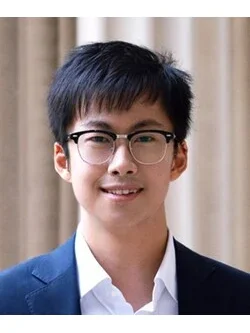
Dr. Yuzhe Yang, PhD
Assistant Professor, UCLA
Yuzhe Yang is an Assistant Professor at UCLA, where he directs the Health Intelligence Lab. He received his Ph.D. in Computer Science at MIT. His research interests include machine learning, artificial intelligence, and their applications in science, medicine, and human health. His research has been published in Nature, Nature Medicine, NeurIPS, ICML, and ICLR, featured in media outlets such as WSJ, Forbes, and BBC, and recognized by the AMIA Doctoral Dissertation Award and Forbes 30 Under 30.
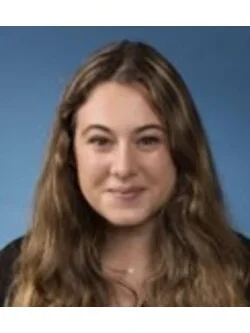
Clara Frydman-Gani
PhD Candidate, UCLA Bioinformatics Interdepartmental Program
Clara Frydman-Gani is a PhD Candidate in the UCLA Bioinformatics Interdepartmental Program and a member of Dr. Loes Olde Loohuis’s lab. Her PhD research includes the development and application of natural language processing (NLP) methods to extract psychiatric phenotypes from Spanish-language electronic health records. Her work spans traditional NLP, encoder-based language models, generative LLMs, and cross-institutional validation across psychiatric hospitals in Colombia. Through this work, she aims to build accurate, interpretable, and shareable clinical NLP tools that support scalable psychiatric research and more globally inclusive precision psychiatry. Clara holds a BSc in Computer Science and Bioinformatics from the Technion and is a UCLA Eugene Cota Robles Fellow.
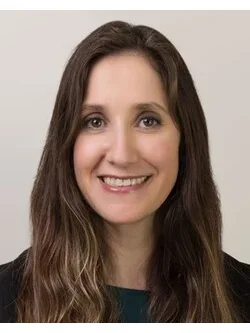
Yael Berkovich
Director, Enterprise Information Architecture, UCLA Health Information Technology
Yael Berkovich is Director of Enterprise Information Architecture at UCLA Health Information Technology, where she leads initiatives in data governance, data products, and AI platforms for the health sciences. Since joining UCLA Health IT in 2013, she has spearheaded implementation of the Collibra Data Intelligence Platform, helped launch the Discovery Data Repository product suite, and developed genomic data pipelines in collaboration with the Institute for Precision Health. She has also established machine learning operations frameworks and advanced Databricks Lakehouse adoption through guardrails for generative AI, retrieval-augmented generation, multimodal data, and agentic AI. As co-leader of UCLA Health’s nebulaONE initiative, she is expanding secure chat capabilities and enabling teams to build and deploy generative AI agents across the organization.
Courtney Martin
Director, UCLA Health Clinical Research Applications
Dr. Serena Wang
Associate Professor, UCLA David Geffen School of Medicine. Chair, AI in Medical Education Council
Dr. Serena Wang is an Associate Professor of Health Sciences at the David Geffen School of Medicine at UCLA and Chair of the AI in Medical Education Council. She is an Educator for Excellence in the Foundations of Practice Course at DGSOM and has developed EHR and EBM curriculums for medical students. She also leads AI faculty development efforts at UCLA and currently runs a course on Foundations in AI in Medical Education. She is currently conducting a randomized controlled trial to evaluate the effectiveness of a custom AI patient simulator/tutor in improving clinical reasoning in pre-clinical medical students.
Dr. Mackensie Yore, MD
Emergency Physician & VA Health Services Research Fellow
Mackensie (Max) Yore is an emergency physician researching health equity and the importance of human connection in medicine. She is particularly interested in using AI tools in medicine to improve population health and health equity by augmenting understanding and empathy between patients and care teams. For the past several years, she has studied the VA-initiated My Life, My Story Program and is particularly interested in how pre-written patient narratives improve care for patients and professional satisfaction for healthcare workers. She has also worked with communities in the Fresno area of the California Central Valley to better understand health impacts of climate change on a human level and is collaborating with an interdisciplinary set of partners to develop community resilience strategies. Dr. Yore has a background in global health and human-centered design, with some of her earliest work pertaining to understanding beliefs around and improving access to care for congenital anomalies. She continues to be involved in global health by teaching emergency medicine to health care providers in Mwanza, Tanzania. Dr. Yore completed her undergraduate degree at Wellesley College, medical degree at Stanford University, residency in emergency medicine at UCSF Fresno, and a fellowship with the VA/UCLA National Clinician Scholars Program. She currently studies the integration of AI tools in medicine at the VA and UCLA as a VA Health Services Research Fellow.
Dr. Helen Shang
Hematology-Oncology fellow at UCLA
Dr. Helen Shang is a Hematology-Oncology fellow at UCLA. She trained in internal medicine and hematology-oncology, with degrees in molecular biology (M.S., summa cum laude) and medicine (M.D., Harvard Medical School), plus advanced training in machine learning and computational genomics. Her work sits at the intersection of computational genomics, AI, and clinical oncology with the overarching goal of building scalable tools to develop novel therapeutics and diagnostics in oncology. Her research spans three areas: the generalizability of polygenic risk scores across diverse populations (HGG Advances, 2024), variational autoencoder methods for whole-slide histopathology (NEJM AI, 2024), and translational outcomes research in hematologic malignancies (Blood, 2023; J Neuro-Oncology, 2022).
Dr. Thomas C. Kingsley, MD, MPH, MS
Director of Applied Artificial Intelligence, UCLA Health. Assistant Professor of Medicine, UCLA
Thomas C. Kingsley, MD, MPH, MS is a physician-scientist and leader in artificial intelligence and biomedical informatics. He serves as Director of Applied Artificial Intelligence at UCLA Health, where he oversees the integration of AI into clinical practice, research, and education. Previously, Dr. Kingsley led the AI transformation at Mayo Clinic as a physician executive, where he also founded and directed the grant-funded Healthcare and Epidemiology AI Lab (HEAL). He has developed and operationalized numerous AI tools in clinical practice, publishes and speaks widely on AI in medicine, and has received awards for his contributions to the field. Dr. Kingsley holds a medical degree from the University of Massachusetts Medical School and graduate degrees in Public Health from Harvard T.H. Chan School of Public Health, Biomedical Informatics from Johns Hopkins University, and Computer Science from the Georgia Institute of Technology. He is an Assistant Professor of Medicine at UCLA and adjunct Assistant Professor of Medicine and Biomedical Informatics at Mayo Clinic.
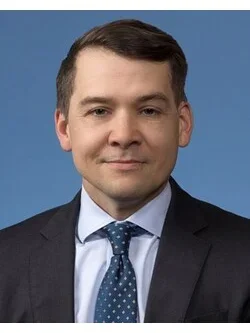
Dr. Paul Lukac, MD, MBA, MS
Chief Artificial Intelligence Officer, UCLA Health. Assistant Clinical Professor of Pediatrics, UCLA
Paul Lukac, MD, MBA, MS, is the inaugural Chief Artificial Intelligence Officer at UCLA Health and an Assistant Clinical Professor of Pediatrics at the David Geffen School of Medicine at UCLA. Prior to his appointment as CAIO, he served as the inaugural Director of Applied AI within UCLA Health’s Office of Health Informatics and Analytics, where he established a novel team of AI physician informaticists responsible for leading the operational implementation of AI technologies across the health system.
As CAIO, Dr. Lukac co-chairs UCLA Health’s Health AI Council and leads the organization’s enterprise AI strategy, spanning governance, evaluation, and the safe, scalable deployment of AI across clinical and operational settings. His research focuses on the real-world evaluation of generative AI in healthcare, including leading one of the first randomized controlled trials of ambient AI documentation technology, published in NEJM AI.
Dr. Lukac earned his MD from Columbia University Vagelos College of Physicians & Surgeons and an MBA from the UCLA Anderson School of Management, and he completed a Clinical Informatics Fellowship at UCLA.
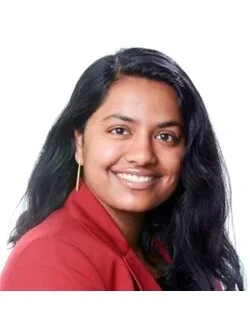
Rukmini Ravi, MS
Research Data Analyst, UC San Diego Supercomputer Center. Patient Experience Researcher, UCLA Health
Rukmini Ravi is a research data analyst at the San Diego Supercomputer Center housed at the University of California, San Diego (UC San Diego), and a patient experience researcher under the mentorship of Dr. Akos Rudas with UCLA Health and the Department of Computational Medicine at UCLA. She collaborates with UCLA Health’s Chief Patient Experience Officer and the CICARE Service Excellence team as an analytics and data science consultant, with the goal of ensuring UCLA Health’s individualized patient care approaches translate into measurable improvements in top-box patient satisfaction and national healthcare percentile rankings. Her professional and educational experiences span efforts including building ETL (Extract, Transform, Load) pipelines to deliver AI-ready datasets that can be leveraged to conduct analyses and build models at scale to serve diverse populations, from patients in healthcare systems to wildland fire researchers. She served as a UCLA Biodesign AI Fellow from 2024 to 2025.